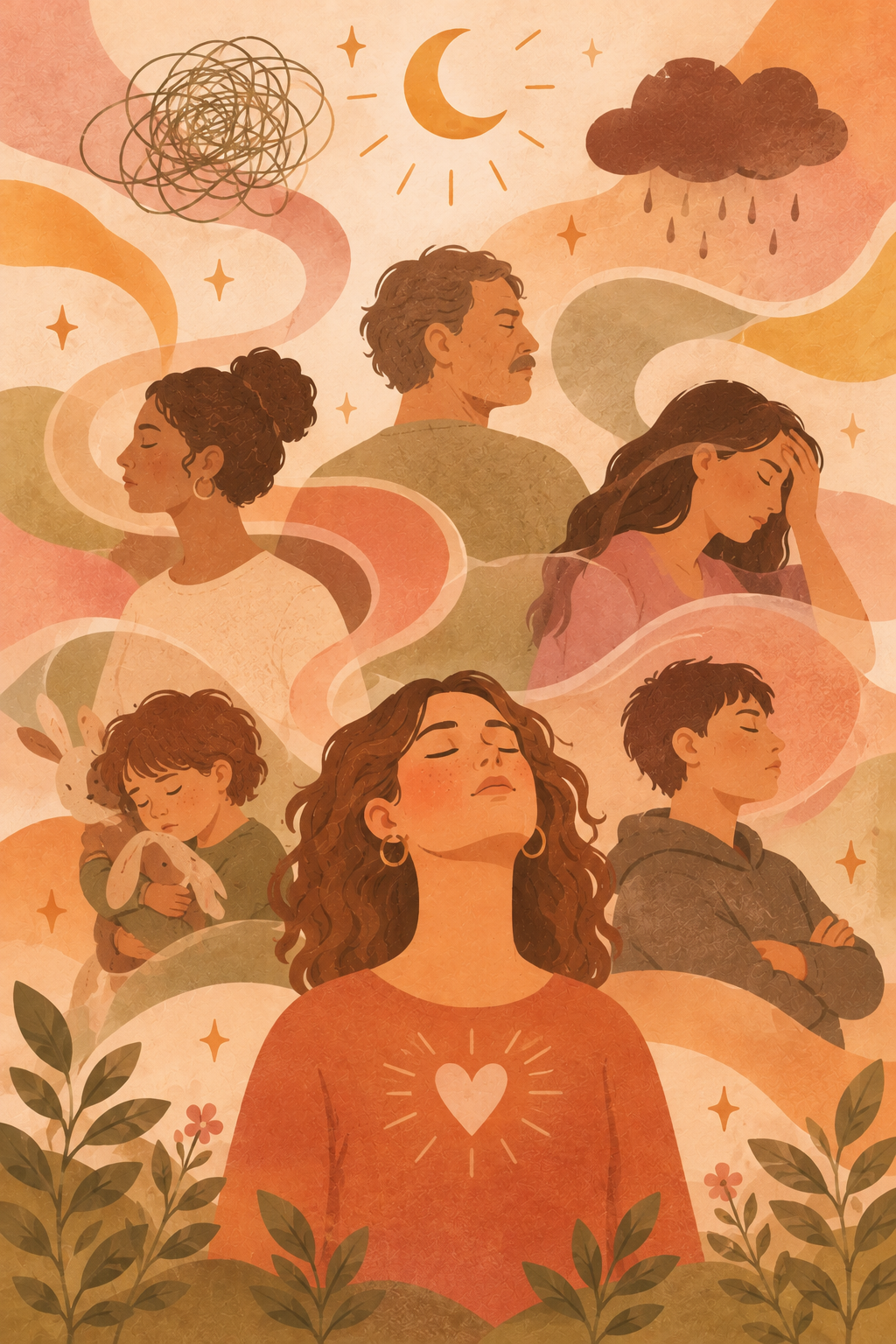
What if I don’t know if I have trauma?
You might find yourself struggling with relationships, feeling disconnected from yourself, questioning your identity, or carrying a persistent sense that something is wrong—but when you look back on childhood, you think, “Nothing was really wrong. My family loved me. I can't point to a single traumatic event that messed me up. So I must be fine.”
Trauma isn't always as obvious as we might imagine. It doesn't have to involve one catastrophic event, physical abuse, or a childhood that was entirely unsafe. Sometimes, trauma develops through the subtle experiences that shape how we learn to relate to ourselves and others.
Our early relationships help build the foundation for secure attachment. We need to experience felt safety, feel seen and known through attunement, feel soothed through co-regulation, know that we are valued, and feel supported to explore the world and develop a sense of autonomy. When these experiences are consistently missing or unreliable, we may learn to adapt in ways that help us get through childhood but leave us struggling in adulthood.
Trauma can also develop when we internalize painful beliefs about ourselves—such as I'm too much, my needs are a burden, I have to earn love, or other people's feelings are my responsibility. It can come from witnessing abuse or harm to someone we love, even when we weren't the direct target. It can also emerge when we're placed in roles that aren't ours to carry: becoming a parent's emotional support, mediating family conflict, or taking on responsibility for raising our siblings. These experiences can blur the boundaries between being a child and being a caregiver, leaving little room to have needs of our own.
You can love your family and still acknowledge that some of your experiences were painful, overwhelming, or missing something essential. You don't have to label your childhood as bad, identify a single defining event, or prove that what happened was bad enough to deserve support. Sometimes, understanding trauma means looking not only at what happened to you, but also at what you needed and didn't receive—and how those experiences continue to shape the way you move through the world.